The maintenance routine, by interval
| Interval | Task | Why it matters |
|---|---|---|
| After every use | Blow dust from motor vents, wipe housing | Dust insulates the motor and cooks the windings |
| After every use | Brush chips out of the chuck or hex collet | Grit in a quick-release hex chuck is why bits stop seating |
| Weekly | Check battery charge level before shelving | Storing at full or empty accelerates lithium capacity loss |
| Monthly | Wipe bare steel with a light oil film | Chrome plating resists corrosion; bare edges don't |
| Monthly | Vacuum the tool chest drawers, check liner | Loose grit under a liner grinds finish off tools |
| Quarterly | Inspect cords, triggers, battery contacts | Cracked strain relief and pitted contacts are cheap to catch early |
| Quarterly | Wipe chest slides, re-tighten caster bolts | Rolling chests loosen; a wobbling drawer stack is a failing one |
| Yearly | Check blade clamps and accessory adapters | Quick-change systems gum up with resin and stop locking |
Quick answer: Most power tools don't die of wear — they die of neglect. Blow out the vents after every dusty session, keep lithium batteries between roughly 30% and 80% charge in a dry space that stays near room temperature, wipe steel down before it goes back in the drawer, and store everything so it isn't rattling loose against other metal. Do those four things and a $149 drill kit outlives three replacements.
Below is the routine, plus a look at the kits people are usually maintaining when they land on this page.
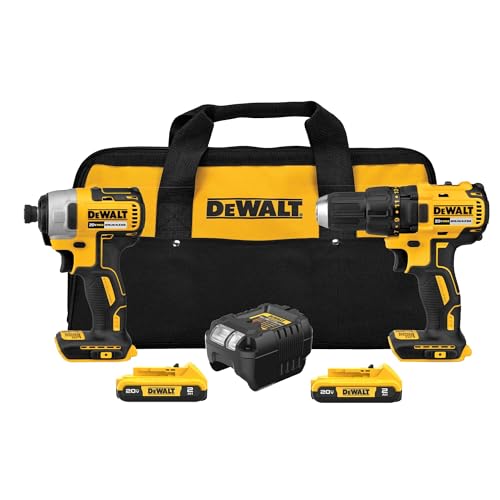
- The compact 7.6-inch front-to-back, lightweight design fits into tight areas, making it an ideal choice for a power drill set
- Its ergonomic comfort grip provides ideal balance and tool control, great for any electric drill used on various projects
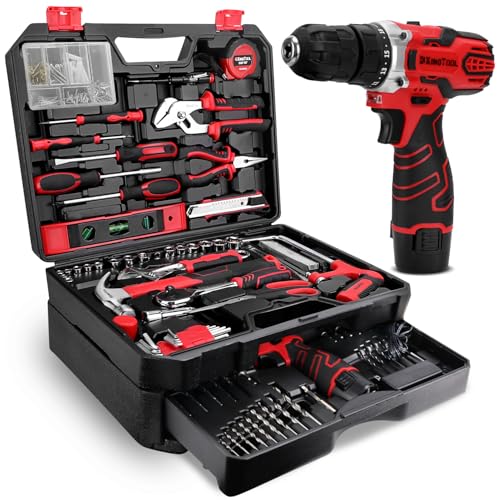
- Upgrade & Durable Toolbox: The Upgrade toolbox is a multi-functional solution that combines aesthetics and practicality. It features a storage compartment with a separate sliding
- Fully Functional & Highly Practical: The 276 Pcs tool set meets Daily Work Needs, easily handling tasks such as furniture repairs, appliance installations, and simple renovations
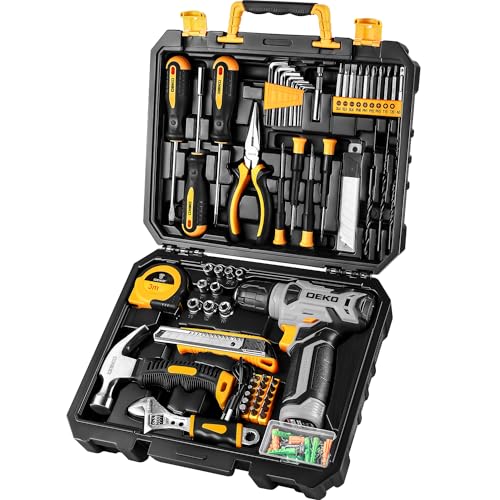
- 【Lightweight Cordless Drill】The 8V drill set can be used for drilling in wood and plastic, and tightening/loosening screws.Press the switch to adjust the speed of the electric
- 【Rechargeable Battery】This drill is supplied with a type-C 1.5A charging cable.A universal charger or USB output(5Vd.c) can charge the small drill.The battery indicator light is
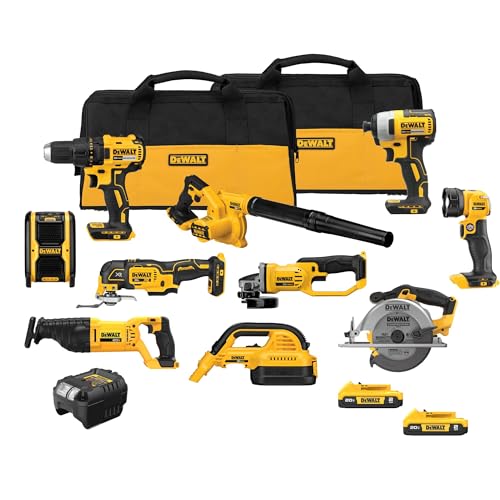
- Compact (7.6 in. front to back), lightweight design fits into tight areas. Variable speed trigger allows for control and precision on delicate work surfaces
- DCS381 with keyless blade clamp allows for quick blade change without touching blade or reciprocating shaft
Storing power tools so they actually stay in shape
Storage is maintenance. A tool in a good home needs almost no rescue work later.
The best how to maintain power tools for your situation depends on how you plan to use it and where.
Give batteries their own shelf. Lithium packs hate heat and hate sitting at either extreme of charge. An uninsulated garage that swings from 20°F to 110°F will strip range out of a pack faster than heavy use will. If your shop is unconditioned, bring batteries inside. Store them around half charge if they'll sit more than a month, and top them off before a big job rather than leaving them on the charger for weeks.
Keep tools in the case they came with. Kits like the DEWALT 20V MAX Cordless Drill and Impact Driver combo ship with a bag for a reason — the tools aren't banging into each other, and the bag keeps ambient dust off. Bare tools loose in a bin collect grit in every vent and crevice.
Fight moisture, not just dust. Concrete floors sweat. Anything sitting directly on concrete picks up humidity. Get tools onto a shelf or into a chest with the drawers closed, and drop a few desiccant packs into the drawers if you're in a humid climate. Silica gel canisters are a few dollars and rechargeable in an oven.
Store heavy low. In a rolling chest, the top drawers should hold bits, drivers, and small hand tools. Drill kits and multi-tools belong in the bottom. A top-heavy rolling chest tips, and a tipped chest ruins whatever's inside it.
Maintaining and cleaning a rolling tool chest
Rolling chests get ignored until a drawer sticks. The routine is short:
- Empty one drawer at a time. Vacuum it out, then wipe with a barely damp cloth and dry it immediately.
- Replace or wash the liner. Foam and rubber liners trap metal filings underneath. That grit is what scratches drawer bottoms and dulls tool finishes.
- Wipe the ball-bearing slides. A clean rag and a very light dry lubricant. Skip heavy grease — it collects dust and turns into a paste that binds worse than nothing.
- Check the casters. Tighten mounting bolts, pull hair and shavings out of the wheel axles, and confirm the locking casters still lock. A chest that rolls when you yank a drawer is a hazard.
- Wipe the exterior with a mild detergent. Powder-coated steel handles this fine. Don't use solvents on the labels or gauge windows.
- Look for rust at the seams. Catch it as a haze and it wipes off. Catch it as a flake and you're sanding.
Who this maintenance routine is for
If you own cordless tools you actually use — a drill, an impact driver, a multi-tool, maybe a saw — and you keep them in a garage rather than a climate-controlled room, this is written for you. It's also for anyone who just bought a chest or a big kit and wants the packs and the steel to still be good in five years. Homeowners with one drill and a screwdriver set get most of the benefit from just the battery and vent rules.
Who should skip most of it
If your tools live in a heated basement, get used a few times a year, and never see jobsite dust, you're doing fine with a wipe-down and a charge check every few months. Compressed-air blowouts and quarterly liner swaps are overkill for a drill that assembles flat-pack furniture twice a summer. Skip the deep chest routine entirely if you're storing tools in the original cases — the cases are already doing the job.
Honest trade-offs
Compressed air is fast but pushes grit deeper. Blowing out vents is the standard advice, and it works, but aggressive air can drive fine dust past bearings. Use moderate pressure, keep the nozzle a few inches back, and vacuum first when there's visible debris.
Lubricants attract dust. Every oil film you add to fight rust also becomes a dust magnet. In a woodshop, a light dry wax often beats oil. In a damp climate, oil wins anyway.
Battery babying has diminishing returns. Storing at partial charge genuinely helps, but if the discipline means your packs are always dead when you need them, you've traded a real inconvenience for a marginal lifespan gain. Keep one pack charged and ready, cycle the rest.
More storage means more forgotten tools. A 276-piece kit in a chest with a sliding drawer holds a lot — and a tool you can't find is a tool you'll buy twice.
What to check on the listing before you buy
Listings shift constantly, so verify these yourself rather than trusting any article, including this one:
- Current price. Every figure here was accurate at the time of writing and may not be now.
- The exact variant. Combo kits sell in near-identical configurations with different battery counts, bag-vs-case packaging, and model suffixes. Confirm the model number in the title matches what you want.
- What's actually in the box. Batteries and chargers are the most common thing quietly dropped from a "bare tool" listing.
- Warranty terms and who honors them. Check the seller — first-party versus marketplace changes your service path.
- Recent buyer reviews. Read them yourself, especially any that mention battery life after a year. That's the spec no listing tells you.
Other kits worth a look
DEWALT 20V MAX Cordless Drill and Impact Driver, Power Drill Brushless 2-Tool Power Tool Combo Kit, Includes 2 Batteries, Charger and Bag (DCK277D2) — consider instead if…
…you want a brushless pair and a compact footprint. The DEWALT 20V MAX Cordless Drill and Impact Driver, Power Drill Brushless 2-Tool Power Tool Combo Kit, Includes 2 Batteries, Charger and Bag (DCK277D2) runs $169.00 with a 7.6-inch front-to-back design, variable speed trigger, a quick-release hex chuck, and an LED with a 20-second delay. Fewer brushes means one less wear item to think about.
DEWALT 20V MAX XR Oscillating Multi-Tool Kit, Oscillating Tool Accessories, Cordless, 3-Speed, Quick Blade Change, Sand Paper, Blades, Battery and Charger Included (DCS356D1) — consider instead if…
…your gap is cutting and sanding in awkward spots, not driving. The DEWALT 20V MAX XR Oscillating Multi-Tool Kit is $114.99, has a 3-speed selector, a brushless motor DEWALT rates at up to 57% more run time over brushed, and a quick-change accessory system that swaps blades without wrenches. That wrench-free system is exactly the mechanism that needs an occasional cleaning.
KingTool 276-Piece Tool Set Kit - Tool kit with 12V Cordless Power Drill Driver Toolbox Storage Case with Drawer, Drill Set Perfect for Homeowner, Diyer, Handyman — consider instead if…
…you need the storage as much as the tools. The KingTool 276-Piece Tool Set Kit is $94.96 and includes a toolbox with a separate sliding drawer, a 12V 2.0 Ah lithium drill with a 3/8" keyless chuck, two-speed control, 1500 RPM max, and heat-treated chrome-finish hand tools. Chrome plating is genuinely easier to keep rust-free than bare steel.
DEKOPRO Tool Set:Tool Kit with 8V Cordless Drill,Tool Box with Drill,Hand Drill Set for Men & Women,Home Tool Kits for House Repair,Handyman,DIY 126 Piece — consider instead if…
…you want the lightest possible starter kit. The DEKOPRO 126 Piece Tool Set is $47.49 with a 1.65-pound 8V drill that charges over USB-C, 800 RPM max no-load, and chrome-plated alloy steel tools. USB-C charging means the pack can live indoors on a desk instead of in a cold garage.
DEWALT 20V MAX Power Tool Combo Kit, 10 Tool Cordless Power Tool Set, 2 Batteries, Charger and 2 Bags Included, Dewalt Brushless Combo Kit (DCK1021D2) — consider instead if…
…you're outfitting a whole shop at once. At $722.16, the DEWALT 20V MAX 10 Tool Cordless Power Tool Set (DCK1021D2) includes a DCS381 recip saw with a keyless blade clamp, a DCL040 LED work light, and a quick-change wheel release for tool-free wheel swaps. Ten tools also means ten sets of vents to keep clean — budget the maintenance time.
FAQ
How often should I actually blow out the vents? After any session with drywall dust, concrete dust, or heavy sawdust. For light indoor work, monthly is plenty. The tell is heat: a tool that runs hotter than it used to is usually breathing through clogged vents.
Should I leave batteries on the charger? No. Pull them once charged. Long-term trickle charging keeps cells at maximum voltage, which is the condition that degrades them fastest. For storage over a month, aim for partial charge.
Can I use WD-40 on my tools? It's fine as a cleaner and water displacer, poor as a long-term lubricant — it evaporates and leaves little protection. Follow it with an actual machine oil or a dry wax if you want lasting rust resistance. Keep all of it out of chucks, triggers, and motor vents.
What's the single highest-value habit? Getting batteries out of temperature extremes. Packs are the most expensive consumable in a cordless system, and heat kills them faster than anything you do with the tool itself.
Related guides
- Impact Driver vs Drill: What's the Difference and Which Do You Need?
- How to Make Straight Cuts With a Circular Saw: Step-by-Step Guide
- Current Rates for Best power tools and garage workshop equipment - drills, impact drivers, circular saws, table saws, tool chests, workbenches, shop vacuums, air compressors, garage storage
Key Takeaways
- Choosing the right how to maintain power tools means matching the key features to your specific needs and budget
- Read real customer reviews and check the return policy before you commit
- Compare value across models — the priciest option is not always the best fit