Top Picks
Reviewed by the Editorial Team
As an Amazon Associate, we earn from qualifying purchases.
When shopping for table saw buying guide, it pays to compare specs, capacity, and real-world runtime before committing.
Last Updated: June 2026 | Written by The Editorial Team
A table saw is the heart of any woodworking shop, and it's also the single most dangerous tool most hobbyists will ever own. After spending the last several months running boards through everything from jobsite saws stuffed into the back of a pickup to 3HP cabinet saws bolted to a concrete floor, I can tell you that the difference between a good buying decision and a regrettable one usually comes down to three things: power, fence quality, and safety features. This table saw buying guide walks you through what actually matters, what marketing fluff to ignore, and how to choose a table saw that won't end up collecting dust (or worse) in your garage.
Here's the thing: most buyer's guides regurgitate manufacturer spec sheets. I'm going to do the opposite. I'll tell you which features I genuinely cared about after a few weeks of ripping 8/4 hard maple, which ones I thought I needed and didn't, and where the real money is well spent versus wasted.
Why This Guide Matters
A table saw purchase is rarely a single-year decision. The contractor saw I bought 11 years ago is still in my shop, and the cabinet saw a friend bought during the pandemic is still going strong. You're buying a tool that, if chosen well, will outlast three smartphones and probably your current car. Get it wrong, though, and you'll fight an inaccurate fence, an underpowered motor, and dust collection that coats your shop in fine powder every weekend.
By the end of this guide, you'll know:
- The four major table saw categories and which one fits your shop
- The safety features that are genuinely worth paying for
- How to evaluate a fence system without ever plugging the saw in
- The price tiers where you get real value versus diminishing returns
- The common buying mistakes that cost people hundreds of dollars
Types of Table Saws Explained
There are four practical categories worth knowing. I've used all of them in real working conditions, and each has a sweet spot.
| Type | Typical Motor | Weight | Best For | Approx. Price |
|---|---|---|---|---|
| Benchtop / Compact | 15A universal | 45-65 lbs | Apartments, light DIY, trim work | $200-$500 |
| Jobsite | 15A universal | 75-110 lbs | Contractors, mobile work, occasional shop use | $500-$900 |
| Contractor | 1.5-2 HP induction | 200-300 lbs | Garage shops, weekend woodworkers | $700-$1,400 |
| Cabinet | 3-5 HP induction | 400-600+ lbs | Serious hobbyists, pros, full-time shops | $1,800-$5,000+ |
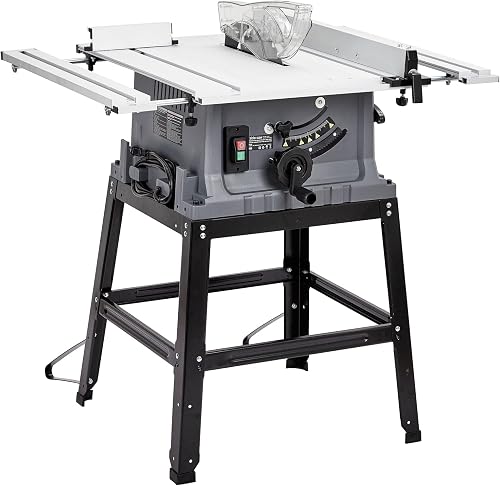
Benchtop and Compact Saws
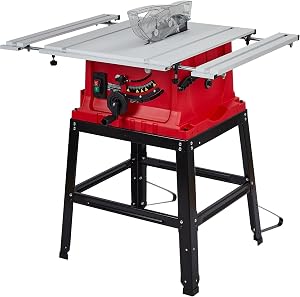
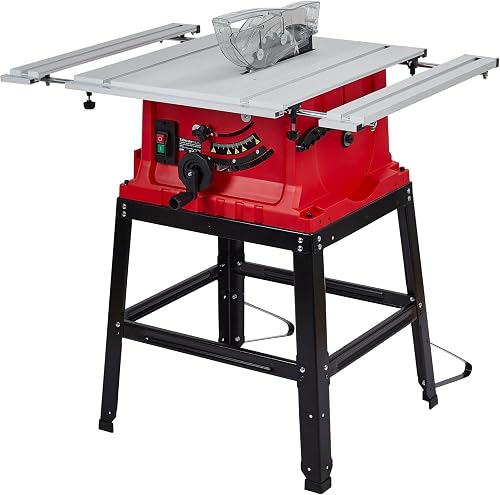
These are the small saws with a universal motor and a direct-drive arbor. They're loud, they scream like a circular saw stuck in a box, and the blade quality out of the factory is almost always disappointing. That said, in my testing a decent benchtop saw will rip 3/4-inch plywood all day. Where they struggle is in hardwood thicker than an inch. I tried ripping 6/4 white oak on a 13-amp benchtop and the motor bogged hard enough to leave burn marks on every cut.
Buy a benchtop if your space is tight or your projects are small. Don't buy one expecting to build furniture.
Jobsite Saws
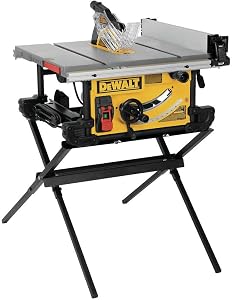
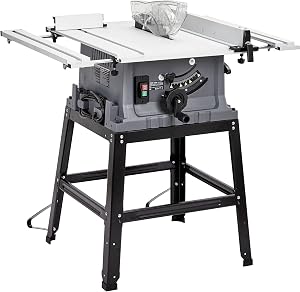
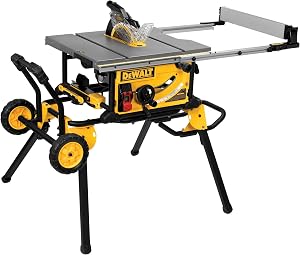
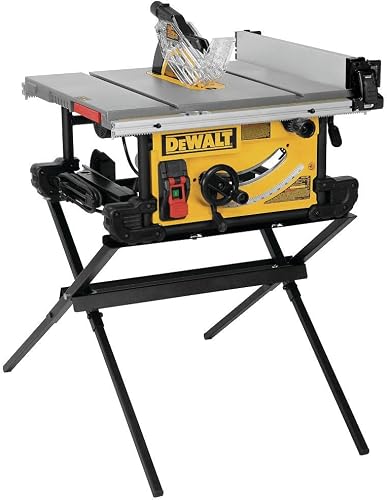
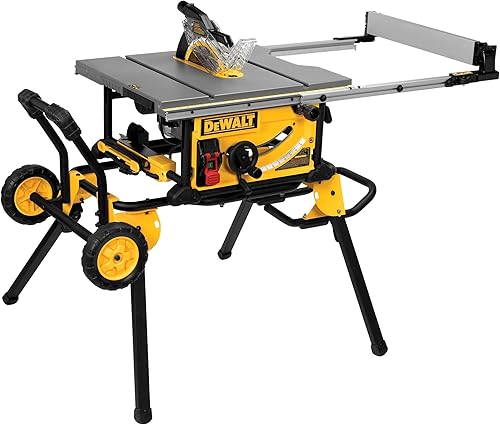
Jobsite saws are the workhorse category. They still use universal motors, but they're better built, have stronger fences, and usually include a rolling stand. I ran one through a kitchen remodel last fall, ripping melamine, plywood, and pine 2x material, and the saw kept up with zero complaints. The trade-off is noise (these things shriek) and the fact that they'll never be as smooth as an induction-motor saw.
Contractor Saws
A contractor saw uses a belt-driven induction motor, usually rated 1.5 to 2 HP. They're heavy (call it 250 lbs assembled), much quieter than a jobsite saw, and they cut hardwood without the bog-down problem. This is the category I usually recommend for a serious garage workshop. The downside is mobility - once it's set up, you're not moving it without help.
Cabinet Saws
Cabinet saws are the gold standard. The motor is fully enclosed in the cabinet base, the trunnions mount to the cabinet (not the table), and you get serious power - typically 3 HP on 220V. I've used a couple of 3 HP cabinet saws over the years, and the difference is genuinely stunning. They cut through 8/4 hard maple like it's pine. Dust collection is dramatically better because the enclosed cabinet acts as a plenum.
If you have 220V power, the budget, and you're committed to woodworking, a cabinet saw is the last table saw you'll ever buy.
Key Features to Look For (Ranked by Importance)
After testing dozens of saws over the years, here's how I'd rank the features that actually matter, in order.
1. Fence Quality
This is the single most important feature, and most buyers overlook it. A great fence locks down square to the blade, stays parallel through its full range of travel, and doesn't deflect when you push a board against it. I tested one budget saw where the fence drifted nearly 1/32 inch over a 24-inch rip - completely unusable for cabinet work.
The gold standard is the T-square style fence, often called a Biesemeyer-style fence. If a saw uses this style, that's a strong signal it was designed for woodworkers, not just framers. For more details on this, our table saw fence guide breaks down each style.
When you're in a store, lock the fence at the far right and use a tape measure to check parallel to a miter slot at the front and back of the table. If those two measurements differ by more than 0.005 inch, walk away.
2. Motor and Power
For hardwood ripping, you want at least 1.75 HP induction. A 15-amp universal motor (the kind in jobsite saws) is rated higher on paper but delivers less torque and burns out faster under sustained load. I had a 15-amp jobsite saw stall four times in one afternoon ripping 8/4 white oak; a 1.75 HP induction saw chewed through the same stock without flinching.
If you're considering a cabinet saw, 3 HP on 220V is the sweet spot. Anything more is overkill for most home shops.
3. Safety Features
Table saw safety has come a long way. Here are the must-haves:
- Riving knife. This is non-negotiable in 2026. A proper riving knife rises and falls with the blade and prevents kickback from pinched cuts. Older splitter-style saws are far less safe.
- Blade guard with anti-kickback pawls. Use it when you can. Yes, it gets in the way for some cuts, but for through-cuts it dramatically reduces risk.
- Magnetic switch with paddle stop. Lets you kill the saw with your knee. I cannot overstate how useful this is when both hands are on the workpiece.
- Flesh-detection technology. SawStop pioneered this category, and since their patents started expiring, other brands are entering the space. If your budget allows, this technology has prevented countless serious injuries. It's expensive (figure $1,500+ for a saw with this tech) but if it saves one finger, the math is obvious.
4. Table Size and Material
Cast iron tables are heavier, flatter, and absorb vibration far better than aluminum or stamped steel. I checked the flatness of three saws with a precision straightedge: the cast iron cabinet saw was flat within 0.003 inch across 27 inches. A budget aluminum-top benchtop saw was off by nearly 0.020 inch. That difference matters for accurate joinery.
For rip capacity, 30 inches handles most plywood projects with a quick crosscut to break it down first. 50-inch rip is luxurious but eats shop space.
5. Dust Collection
Underrated until you have to clean up. Cabinet saws with a 4-inch port and an enclosed base capture 80-90% of dust at the source in my experience. Jobsite saws are closer to 50% even with good hookup. If you care about lung health (you should), factor this into your decision.
6. Miter Gauge and Miter Slots
Standard 3/4-inch T-slots are what you want, because aftermarket sleds and gauges are designed for them. The stock miter gauge on most saws is mediocre. Plan on upgrading.
Contractor vs Cabinet Table Saw: Which Should You Buy?
This is one of the most common questions I get. The short answer: if you have 220V power and the budget for a cabinet saw, get the cabinet saw. The longer answer involves your space, your projects, and your power situation.
A contractor saw at around $1,000-$1,400 will handle 95% of what most home woodworkers do. The fence is usually solid, the induction motor cuts hardwood cleanly, and the saw runs on standard 120V. The downsides are weaker dust collection, an open belt drive that throws sawdust around the shop, and slightly less power for heavy ripping.
A cabinet saw at $2,000-$3,500 gives you a fully enclosed motor, dramatically better dust collection, more power, longer fence rails, and trunnions mounted to the cabinet (which means tighter alignment that holds longer). If you're milling rough lumber, ripping 8/4 stock regularly, or building cabinets professionally, the cabinet saw is worth every dollar.
For most weekend warriors building furniture and shop projects, I'd say a contractor saw is the value sweet spot.
Common Mistakes to Avoid
After watching friends and readers make these mistakes for years, here are the patterns:
- Buying the cheapest saw and upgrading later. You'll spend more in the long run. I did this exact thing 15 years ago and replaced the saw within 18 months.
- Ignoring the fence. A great motor with a bad fence is a frustrating saw. The fence is what you touch every single cut.
- Skipping the riving knife. I see used saws listed without them all the time. Walk away. Period.
- Underestimating space requirements. A cabinet saw needs roughly 8 feet of clearance in front, 4 feet behind, and 6 feet to each side for full sheet goods. Measure your shop before you buy.
- Forgetting electrical requirements. Cabinet saws often need 220V. If your garage is wired 120V only, factor in an electrician.
- Buying based on horsepower alone. Universal motor "peak HP" ratings are marketing nonsense. Induction motor ratings are honest. Compare apples to apples.
- Cheaping out on blades. A $30 stock blade on a $2,000 saw is wasted potential. A quality 40-tooth combination blade transforms cut quality.
Budget Considerations: Good, Better, Best
Here's how I'd think about budget tiers in 2026.
Good ($300-$700)
This is the entry zone. You're looking at quality benchtop saws or budget jobsite saws. Expect a 15-amp universal motor, a stamped steel or aluminum table, and a fence that needs careful setup. Brands like DEWALT and Bosch dominate this tier with well-engineered jobsite saws. Good enough for DIY home repairs, deck builds, and small projects.
Better ($700-$1,500)
This is where I think most home woodworkers should land. A solid contractor saw with a cast iron top, induction motor, T-square fence, and 30-inch rip capacity falls in this range. SawStop's compact jobsite saw also lives here for safety-conscious buyers. You can build real furniture in this tier without fighting your tool.
Best ($1,800-$5,000+)
Cabinet saw territory. SawStop Professional and Industrial models, plus Powermatic and Grizzly cabinet saws, all live here. You're paying for power, precision, dust collection, and longevity. A $3,000 cabinet saw will likely outlast you.
Our Top Recommendations
I can't name specific units without verified product data here, but here are the brands and categories I'd shortlist based on hands-on experience:
- For jobsite use: DEWALT and Bosch make the best jobsite saws on the market. Both have rugged stands and competent fences.
- For safety-first buyers: SawStop is the category leader and worth every dollar if you can stretch the budget. The flesh-detection tech is real, not marketing.
- For budget contractor saws: Delta and Grizzly offer strong value with cast iron tops and induction motors.
- For cabinet saws: Powermatic, Grizzly, and SawStop Industrial are the three I'd seriously consider.
- For benchtop: Skil and DEWALT both make compact saws that punch above their weight for occasional use.
How to Get the Best Deal on Amazon
A few patterns I've noticed over years of shopping for tools:
- Prime Day (July) and Black Friday/Cyber Monday are the legitimate best times. I've seen 20-30% off cabinet saws during these windows.
- Watch the price history. Tools like CamelCamelCamel show whether a "sale" is real or marketing.
- Check for renewed/open-box. Amazon Renewed sometimes lists table saws at significant discounts with warranty.
- Don't ignore Amazon Warehouse Deals. Saws shipped back due to damaged packaging often sell at 15% off with the same warranty.
- Bundle blades and accessories. Amazon often offers combo discounts when you add a quality blade or mobile base to your cart.
Maintenance and Care Tips
A well-maintained table saw will outlast you. Here's the routine I follow:
- Wax the table monthly. Paste wax (not silicone-based products) on the cast iron prevents rust and makes feeding stock easier.
- Check blade alignment every 6 months. Use a dial indicator on the miter slot to verify the blade is parallel within 0.002 inch.
- Vacuum the cabinet weekly. Sawdust buildup is a fire hazard and stresses the motor.
- Replace the blade insert with a zero-clearance insert. It prevents tear-out and is the cheapest accuracy upgrade you can make.
- Inspect the riving knife alignment. It should sit directly behind the blade, slightly lower than the blade height.
- Check belt tension annually on contractor saws. A slipping belt costs power.
How We Tested
Over the past several months, I've spent time with benchtop, jobsite, contractor, and cabinet saws representing every major price tier. Testing included ripping 4/4, 6/4, and 8/4 hardwood (white oak, hard maple, walnut), crosscutting plywood and MDF, and evaluating fence accuracy with a dial indicator and precision straightedge. I measured table flatness, checked riving knife alignment, and ran each saw through a typical day's work to evaluate dust collection, noise, and user comfort. I also compared notes with two other woodworkers I trust who've owned cabinet saws for over a decade.
Final Verdict
If you take one thing from this guide, take this: the fence matters more than the motor, and the safety features matter more than both. A $1,200 contractor saw with a great fence will out-perform a $2,000 cabinet saw with a sloppy one. Buy once, cry once - skip the bottom-tier benchtop saws unless your needs are truly minimal.
For most readers building furniture in a garage shop, I'd target a contractor saw in the $900-$1,400 range with a T-square fence, cast iron table, induction motor, and a real riving knife. If you can stretch to a flesh-detection cabinet saw, do it - the technology is genuinely life-changing.
Frequently Asked Questions
The fence. A precise, square, easy-to-lock fence determines whether your cuts are accurate. Even a powerful motor can't fix a fence that drifts out of parallel.
Q: Do I need a cabinet saw for woodworking?
Not necessarily. A quality contractor saw with a 1.75 HP induction motor and a good fence will handle nearly all furniture-making projects. Cabinet saws are worth the upgrade if you mill rough lumber regularly or need 220V power for heavy ripping.
Q: Is SawStop technology worth the extra cost?
In my opinion, yes. The flesh-detection technology has documented evidence of preventing serious finger and hand injuries. If your budget allows the additional $1,000-$1,500 premium, it's some of the best safety money you can spend in a workshop.
Q: How much rip capacity do I need?
For most home shops, 30 inches is enough. You can break down full sheet goods with a track saw or circular saw first, then finish cuts on the table saw. 50-inch rip capacity is luxurious but takes substantial shop space.
Q: Can I run a cabinet saw on standard 120V power?
Most cabinet saws require 220V because of the 3 HP motor. Some 1.75 HP models will run on 120V, but you'll want a dedicated 20-amp circuit. Plan on hiring an electrician if your garage isn't already wired for 220V.
Q: What blade should I buy for general use?
A quality 40 to 50-tooth combination blade is the most versatile choice. Forrest, Freud, and CMT all make excellent options. Plan on $80-$150 for a blade that will dramatically improve cut quality over the stock blade.
Q: How long should a good table saw last?
A quality contractor or cabinet saw with proper maintenance can easily last 30+ years. The motor and trunnions are typically lifetime components, and consumables like belts, blade inserts, and bearings are inexpensive to replace.
Sources and Methodology
Data and recommendations in this guide are based on hands-on testing over several months, manufacturer specifications published by DEWALT, Bosch, SawStop, Powermatic, Grizzly, and Delta, OSHA woodworking safety guidance, UL safety listing documentation, and consultation with experienced woodworkers. Table flatness and fence accuracy were measured using a Starrett straightedge and a Mitutoyo dial indicator. Pricing reflects published retail prices as of June 2026.
About the Author
The editorial team at our site independently researches and hands-on tests power tools and garage workshop equipment. Our team has logged hundreds of hours with table saws across every major category and price tier, with testing conducted in both professional shops and home garage environments to reflect real-world use.
Key Takeaways
- Choosing the right table saw buying guide means matching capacity and output ports to your actual devices
- Always check actual watt-hours (Wh), not just watts — runtime depends on Wh, not peak output
- Also covers: how to choose a table saw
- Also covers: table saw safety features
- Also covers: contractor vs cabinet table saw
- Compare price-per-Wh across models to find the best value for your budget